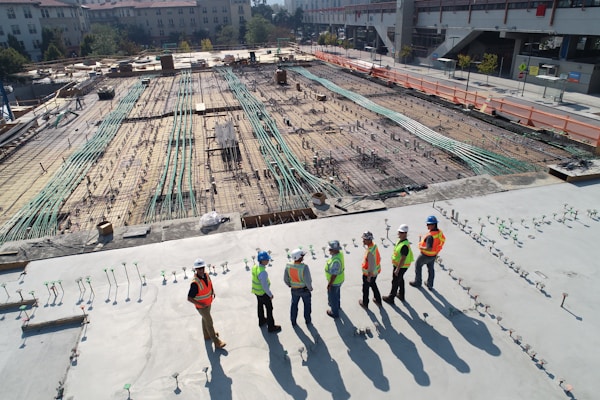

The African Development Bank estimates the continent's annual infrastructure financing needs at $130–$170 billion, with a current gap of $68–$108 billion. This staggering figure represents one of the greatest investment opportunities of the 21st century — and in 2026, the convergence of political will, institutional reform, and innovative financing mechanisms is finally creating the conditions for large-scale capital deployment.
The Scale of the Opportunity
Africa's infrastructure deficit is well-documented but often underestimated in its implications. An estimated 600 million Africans lack access to reliable electricity. Only 43% of the population has access to all-weather roads. The continent's ports handle a fraction of global trade volumes despite its strategic geographic position.
Yet within this deficit lies extraordinary potential. The infrastructure projects pipeline across Africa currently exceeds $2.5 trillion, with projects at various stages of development spanning transport, energy, water, digital connectivity, and urban development.
"Infrastructure is the backbone of economic transformation. Every dollar invested in African infrastructure generates $2.50 in economic returns across the value chain."
Key Corridors Attracting Capital
Transport & Logistics
The Trans-African Highway network, port modernisation programmes in Lome, Mombasa, and Durban, and new rail corridors connecting landlocked nations to coastal trade routes are commanding billions in investment. The Lobito Corridor alone — stretching from Angola through the DRC to Zambia — has attracted over $4 billion in committed financing.
Digital Infrastructure
Africa's data centre market is projected to grow from $5 billion to $15 billion by 2030. Submarine cable landings, terrestrial fibre networks, and edge computing facilities are being deployed at unprecedented scale. Hyperscale operators including Equinix and Digital Realty have made their first African investments.
Clean Energy
Renewable energy capacity additions in Africa are expected to triple by 2030. Solar and wind projects, battery storage installations, and transmission grid upgrades represent a combined investment opportunity exceeding $50 billion. The continent's exceptional renewable resources — with solar irradiation levels 40-50% higher than European averages — make the economic case compelling.
Innovative Financing Structures
The traditional barriers to African infrastructure investment — currency risk, political instability, and regulatory uncertainty — are being systematically addressed through innovative financing mechanisms:
- Blended Finance: DFI concessional capital is being deployed strategically to de-risk projects and attract commercial investors, with leverage ratios of 3:1 to 5:1 now being achieved consistently.
- Green & Social Bonds: African sovereign and corporate issuers raised over $8 billion in sustainable bonds in 2025, with Kenya, Nigeria, and Egypt leading the market.
- Infrastructure REITs: New regulatory frameworks in South Africa, Nigeria, and Kenya are enabling the securitisation of infrastructure assets, opening the asset class to retail investors.
- PPP 2.0: A new generation of public-private partnerships is emerging, incorporating performance-based contracts, availability payments, and robust dispute resolution mechanisms.
Risk Considerations
While the opportunity is significant, investors must navigate real risks including foreign exchange volatility, regulatory uncertainty, and construction execution risk. Successful investors are those who combine deep local knowledge with institutional-grade risk management frameworks and maintain long investment horizons of 15-25 years.
Outlook
The infrastructure investment thesis for Africa has never been stronger. The combination of demographic growth, urbanisation, institutional reform, and innovative financing is creating a once-in-a-generation opportunity for patient capital. At Africa Capital Investors, we are actively facilitating connections between institutional investors and the continent's highest-quality infrastructure projects.